 Hydrocolloids
Xanthan Gum
Food grade hydrocolloid that improves viscosity, suspension and product consistency.
SaucesBeverages
View Product
Guar Gum is a food-grade, plant-derived hydrocolloid used to build viscosity, bind water and support texture and stability across a wide range of food formulations.

Guar Gum is a natural galactomannan obtained from the endosperm of guar seeds, sourced from the plant Cyamopsis tetragonolobus.
It hydrates in water and develops viscosity efficiently, making it a widely used thickening and water-binding ingredient in food manufacturing. Depending on the formulation, Guar Gum can support body, mouthfeel, suspension and processing consistency.
Its performance is influenced by particle size, hydration conditions, temperature, shear and interaction with other ingredients. Grade selection should therefore be based on the intended application and manufacturing process.
Builds viscosity effectively and supports body in liquid and semi-solid food systems.
Helps manage free water and can support moisture retention within the finished product.
Contributes to smoothness, body and a more consistent sensory profile.
Helps reduce settling and supports the distribution of suspended particles in suitable formulations.
Can help improve physical stability and reduce separation as part of a properly designed formulation.
Can be used independently or with starches, xanthan gum and other hydrocolloids depending on required performance.
Supports viscosity, cling, suspension and texture in emulsified and non-emulsified systems.
Contributes to body, water management and texture in selected dairy products and frozen desserts.
Supports dough handling, moisture retention and texture in selected bakery formulations.
Provides viscosity and suspension support in suitable beverage systems, subject to required clarity and mouthfeel.
Used in soups, fillings, prepared foods and other products requiring controlled viscosity and water binding.
Suitable for dry blends designed to develop viscosity after hydration.
Formulators typically evaluate the grade according to its performance under the intended processing conditions. Important considerations include:
Detailed specifications are available upon request.
Depending on the application, Guar Gum may be available in different forms or grades, including:
The most suitable option depends on target viscosity, hydration conditions, production process and finished-product requirements.
Technical documents are available upon request, including:
*Availability depends on the selected grade and manufacturer.
Choosing the right ingredient involves more than selecting a product. At EMTA Kimya, we support food manufacturers with:
A vetted international supplier network that keeps quality and supply consistent.
Support in identifying the Guar Gum grade best suited to the formulation and process.
Technical and quality documentation shared on request to support evaluation and approval.
Commercial arrangements adapted to volume requirements and production schedules.
Clear and timely communication throughout product evaluation, sampling and ordering.
Hydrocolloids
Food grade hydrocolloid that improves viscosity, suspension and product consistency.
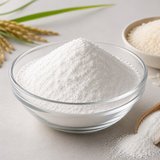 Starch
Versatile starch used to improve texture, stability and processing performance.
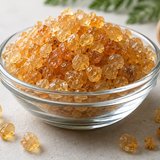 Hydrocolloids
Natural hydrocolloid used for emulsion stability, flavour encapsulation and texture improvement.
Whether you are developing sauces, dairy products, bakery formulations or processed foods, our team can help identify the Guar Gum option that best fits your formulation and production process.