What Does Clean Label Mean in Confectionery?
The term clean label is widely used across the food industry, but it does not have one universally accepted technical definition.
In practice, its most concrete and frequently cited meaning is this: replacing synthetic or E-numbered additives with natural-origin, consumer-recognisable ingredients that can perform the same technical function. Replacing a synthetic emulsifier with Gum Arabic, or replacing a synthetic colouring/whitening system with a starch-based opacity solution, are concrete examples of this logic.
Beyond that, depending on the company, product and market, clean label may also refer to:
- Shorter ingredient lists
- Greater transparency about ingredient sources
- Reduced sugar or simplified nutritional positioning
- Less technical terminology on the label
For confectionery manufacturers, these objectives can be challenging because many ingredients that appear in small quantities perform essential technical functions — removing an additive usually means finding another ingredient to cover that function.
A successful clean label project therefore requires more than deleting ingredients from a recipe. Each ingredient's role must first be understood, and then the natural/recognisable alternative capable of covering that role.
Why Clean Label Is Challenging in Confectionery
Confectionery is highly dependent on precise control of:
- Texture
- Sweetness
- Sourness
- Colour
- Surface appearance
- Moisture
- Crystallisation
- Shelf-life behaviour
- Processing consistency
Removing or replacing one ingredient can affect several of these attributes simultaneously.
For example, replacing sugar affects more than sweetness. It may also influence bulk, texture, water activity, crystallisation and processing.
Similarly, replacing a colour or opacity solution may alter visual impact, coating performance or consumer expectations.
This means clean label reformulation should be treated as a full-system project rather than a simple ingredient substitution.
Key Trends
Trend 1: Replacing Synthetic Additives with Natural, Recognisable Ingredients
This is the most concrete and most frequently requested dimension of clean label work. When looking for a natural-origin ingredient that can replace a synthetic additive, manufacturers must first define exactly what function that additive performs — stabilisation, emulsification, texture, or whitening/opacity?
Concrete examples:
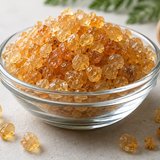
- Gum Arabic in place of a synthetic emulsifier, for emulsion stability and flavour encapsulation
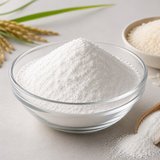
- Rice starch and similar natural starches replacing part of a modified-starch system, for texture and coating performance
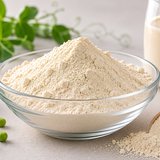
- Pea Protein in place of animal-derived or synthetic sources, for protein enrichment
This substitution is often not one-to-one — the natural ingredient may deliver the same function at a different dosage, under different processing conditions, or through a combination of ingredients. For this reason, substitution decisions should be backed by trials and documentation.
Trend 2: Greater Ingredient Transparency
Manufacturers increasingly review whether ingredient names and functions can be explained clearly to customers and consumers. This may involve:
- Choosing ingredients with well-understood functions
- Improving supplier documentation
- Clarifying ingredient origin
- Supporting accurate product communication
- Avoiding claims that cannot be substantiated
Transparency begins with reliable technical information across the supply chain.
Trend 3: Shorter and More Focused Ingredient Lists
Some confectionery brands are seeking formulations with fewer ingredients. However, fewer ingredients do not automatically create a better-performing product.
A multifunctional ingredient may help simplify a formulation by supporting more than one objective at once. For example, an ingredient might contribute to texture, stabilisation and film formation depending on the application — effectively replacing two or three separate additives.
The key question is not simply "How many ingredients are present?" It is: "Does every ingredient have a clear and necessary function, and can that function be covered by a more familiar ingredient?"
Trend 4: Sugar Reduction Without Losing Product Quality
Sugar reduction remains one of the most important development areas in confectionery. The World Health Organization recommends keeping free sugar intake below 10% of daily energy, ideally below 5% — a guideline that anchors much of the reformulation and sugar-tax debate across markets.
However, sugar contributes to sweetness, bulk, texture, mouthfeel, structure, crystallisation and processing behaviour.
Manufacturers may therefore evaluate bulk sweeteners such as maltitol or erythritol as part of broader sweetener systems. The appropriate solution depends on the product. A chocolate, gummy or hard candy formulation will not respond to sugar reduction in the same way.
Clean label and sugar reduction objectives should also be evaluated separately. An ingredient that supports reduced-sugar positioning may not automatically align with every brand's clean label strategy — polyol sweeteners, for example, achieve sugar reduction but do not always meet the "natural/recognisable ingredient" criterion to the same degree.
Trend 5: Colour and Opacity Reformulation
Colour and visual appearance are central to confectionery appeal.
Reformulation in this area can come from two genuinely different sources, and the distinction matters. In some cases the driver is a voluntary clean label preference; in other cases it is a direct regulatory requirement. The solution used (replacing a synthetic colourant with a natural/recognisable ingredient) is often the same, but the motivation is not:
- Regulatory requirement: the European Union banned titanium dioxide (E171) as a food additive under Commission Regulation (EU) 2022/63, on the grounds of a genotoxicity concern raised by the European Food Safety Authority. The ban has been in effect since August 2022 and is not optional for companies manufacturing or selling food in the EU. Other major markets — including the US, Canada and the UK — have not followed the ban and continue to consider TiO2 safe, meaning the same product may need to be formulated differently for different markets.
- Industry initiative / partly voluntary action: in the US, the FDA announced a framework in 2025 for phasing out eight synthetic food dyes by the end of 2026; one of these (Red No. 3) is formally banned in food (with compliance required by January 2027), while the rest rely largely on voluntary industry cooperation. This sits somewhere between a pure clean label trend and regulatory pressure.
Manufacturers may evaluate alternatives to certain colouring or whitening systems because of regulatory developments, customer requirements or brand positioning. In coated confectionery and dragee applications, potential approaches may include:
- Reformulating the colour system
- Adjusting coating structure
- Evaluating starch-based opacity support
- Combining multiple ingredients rather than seeking a direct one-to-one replacement
Rice starch, for example, may be evaluated as part of selected whitening or opacity strategies. However, performance depends on the formulation, processing conditions and desired visual result.
Claims such as "direct titanium dioxide replacement" should be avoided unless supported by product-specific trials and documentation.
Trend 6: Plant-Based and Functional Confectionery
The boundaries between confectionery and functional foods are becoming less distinct. Examples include:
- Protein-enriched bars
- Functional gummies
- Plant-based snacks
- Reduced-sugar confectionery
These products may require plant proteins, alternative sweeteners, acidulants and texture systems to work together.
The resulting label may not always be shorter, but it can be more intentionally designed around the product's positioning and technical needs.
Trend 7: Greater Scrutiny of Supplier Documentation
Clean label projects often begin in R&D but require coordination with quality, regulatory and purchasing teams. Supplier documentation may include:
- Product specifications
- Ingredient composition
- Allergen statements
- Non-GMO declarations
- Origin information
- Processing information
- Regulatory compliance statements
- Halal and Kosher certificates where relevant
The accuracy and availability of these documents can influence whether an ingredient is suitable for a clean label project.
This makes supplier selection part of the formulation strategy.
Reformulation Questions Manufacturers Should Ask
Before beginning a clean label project, teams should define:
- What exactly does clean label mean for this product?
- Which market and regulation apply?
- Which ingredients — particularly which synthetic additives — are being questioned, and why?
- What technical role does each ingredient perform?
- Which sensory attributes must remain unchanged?
- Is the objective a shorter list, more familiar ingredients or a specific claim?
- Which changes require shelf-life and process validation?
- Can the supplier support the required documentation?
Clear answers help prevent reformulation driven only by vague expectations.
Common Clean Label Reformulation Risks
Treating Ingredients as Direct Replacements
Two ingredients may perform similar headline functions but behave differently during processing.
Ignoring Scale-Up Conditions
A formulation that works in laboratory trials may change under industrial mixing, heating, cooling or coating conditions.
Focusing Only on the Front Label
A marketing claim should not override technical feasibility, regulatory compliance or finished-product quality.
Underestimating Sensory Change
Changes in sweetness, sourness, texture, opacity or mouthfeel may affect consumer acceptance even when the ingredient list appears simpler.
Incomplete Supplier Information
Insufficient documentation can delay quality approval and market launch.
Ingredient Categories Relevant to Clean Label Confectionery
Hydrocolloids
May support texture, stabilisation, film formation and processing performance.
Relevant products: Gum Arabic, Xanthan Gum
Sweeteners
May support sugar-reduced formulations while contributing sweetness, bulk and texture.
Relevant products: Maltitol, Erythritol
Starches
May contribute to texture, coating, appearance and selected opacity strategies.
Relevant product: Rice Starch
Plant Proteins
May support protein enrichment and functional-food positioning.
Relevant product: Pea Protein
Acidulants
Help shape sourness and flavour perception but should be selected according to the desired sensory profile.
Relevant products: Citric Acid, Malic Acid, Encapsulated Citric Acid
Things to Consider
Clean label should not be presented as an absolute measure of product quality or healthfulness.
It is a market and formulation concept that differs between companies and regions.
Manufacturers should therefore avoid broad claims and evaluate each project based on:
- Target market
- Applicable regulation
- Product category
- Consumer expectation
- Technical feasibility
- Supplier documentation
- Shelf-life and sensory validation
A careful, evidence-based approach is more sustainable than following a short-term ingredient trend.
Sources
Innova Market Insights, Global Clean Label Trends (2025-2026) · European Commission, Regulation (EU) 2022/63 on the ban of titanium dioxide (E171) as a food additive · US Food and Drug Administration, announcement on the phase-out of synthetic food dyes (April 2025) · World Health Organization, guideline on free sugar intake (2015).