 Encapsulated Acidulant
Encapsulated Citric Acid
Controlled-release acidulant designed for delayed acid activation and improved processing.
ConfectioneryChewing Gum
View Product
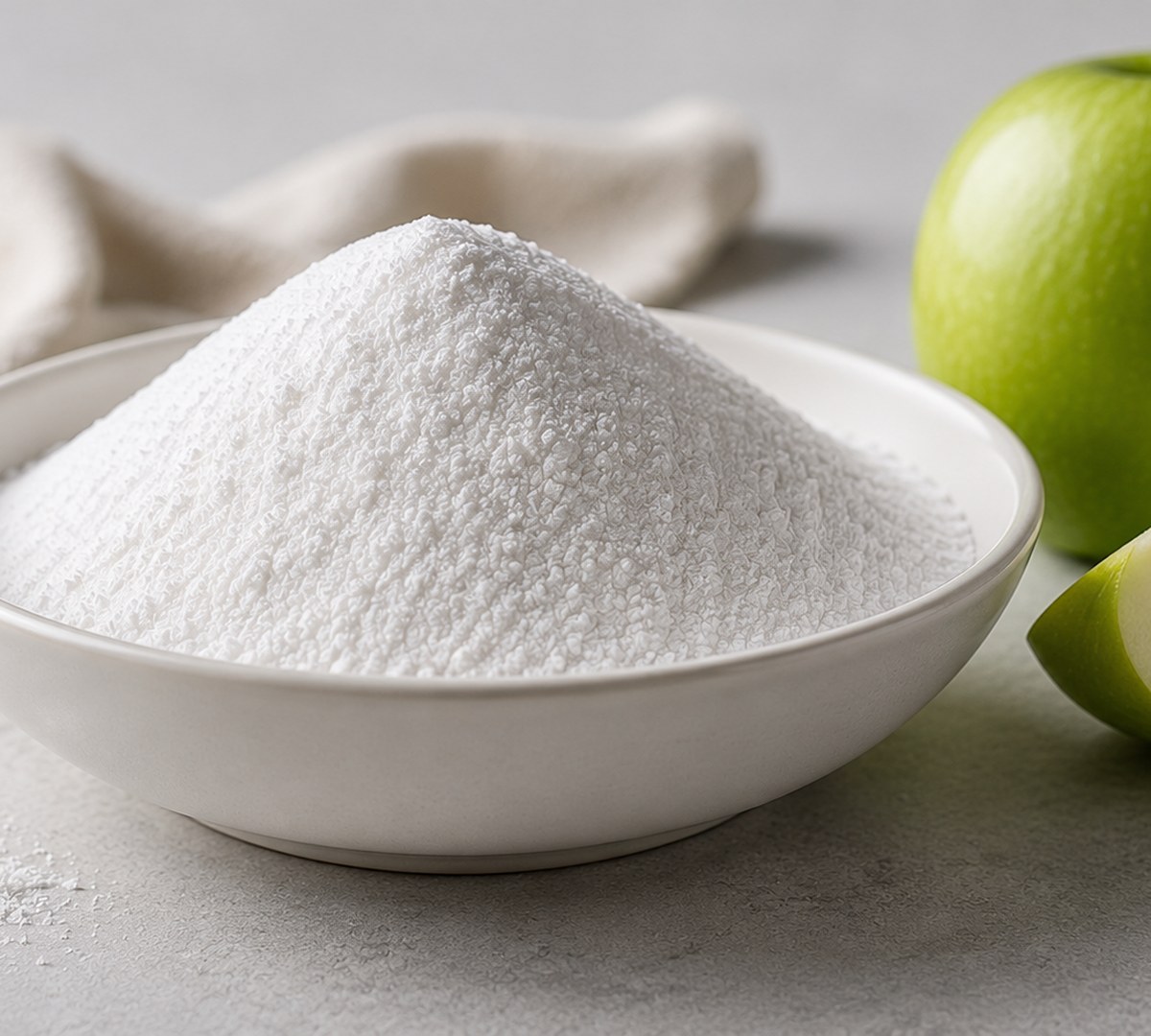
Encapsulated Malic Acid is a food-grade coated acidulant designed to protect malic acid and control when acidity is released during processing or consumption.
*The declaration and regulatory status of the finished encapsulated ingredient depend on its complete composition and applicable local legislation.
Encapsulated Malic Acid is produced by applying a food-grade protective coating around malic acid particles. This coating helps limit premature exposure of the acid to moisture and other formulation components.
Unlike standard Malic Acid, which becomes available rapidly when dissolved, an encapsulated grade is designed to modify the timing or rate of acid release. The release mechanism may be influenced by moisture, temperature, mechanical action or other application-specific conditions.
This functionality can be valuable where early acidification, ingredient interaction, hygroscopicity or a short-lived sour profile creates formulation challenges.
Modifies the point or rate at which malic acidity becomes available in the application.
Helps separate the acid from moisture-sensitive or reactive ingredients before the intended release stage.
Can support a longer-lasting sour profile in confectionery and chewing gum applications.
Allows formulators to introduce acidity while reducing its immediate impact during selected process stages.
The coating may help reduce direct moisture pickup and improve handling compared with the uncoated acid, depending on grade.
Coated particles can support more controlled delivery when correctly dispersed and processed.
Supports intense or extended sour profiles in hard candy, chewy candy, gummies and coated products.
Helps prolong sour and fruit flavour perception while limiting premature interaction during production and storage.
Can provide delayed acidification where immediate acid contact may affect dough, gluten or leavening performance.
Helps separate acid from reactive components during storage until the intended activation stage.
Suitable for selected bars, chewable products and dry blends requiring controlled acid delivery.
Can be evaluated where delayed acidity or protection during dry blending is desired.
Encapsulated Malic Acid should be selected as a complete delivery system, not only by the identity of its acid core. Typical evaluation criteria include:
Detailed specifications and application guidance are available upon request.
Depending on the producer and intended application, options may include:
Availability and terminology vary by manufacturer. The correct grade must be confirmed against the formulation and process.
Technical documents are available upon request, including:
*Availability depends on the selected grade and manufacturer.
Choosing the right ingredient involves more than selecting a product. At EMTA Kimya, we support food manufacturers with:
Support in matching coating system and release behaviour to the formulation objective.
A selected international supplier network focused on consistent quality and dependable supply.
Composition and quality documents shared on request to support evaluation and approval.
Commercial arrangements adapted to volume and production schedules.
Clear communication throughout technical evaluation, sampling and ordering.
Encapsulated Acidulant
Controlled-release acidulant designed for delayed acid activation and improved processing.
 Acidulants
Acidulant valued for smooth, long-lasting sourness across confectionery and beverages.
 Acidulants
Efficient acidulant with strong sourness, low hygroscopicity and dry-blend stability.
Acidulants
Naturally occurring acidulant with a distinctive tart flavour for wine and confectionery.
Whether you are developing sour confectionery, chewing gum, bakery products or powdered systems, our team can help evaluate the Encapsulated Malic Acid grade that best fits your release and processing requirements.