Application Guides
Category
Food Acidulants
Ingredients for Flavour, pH Control & Formulation Performance
Acidulants play an essential role in food manufacturing by influencing flavour, acidity, product stability and processing performance.
Selecting the right acidulant is not simply about achieving a sour taste. Different acidulants offer distinct sensory profiles and functional characteristics that can significantly affect the final product.
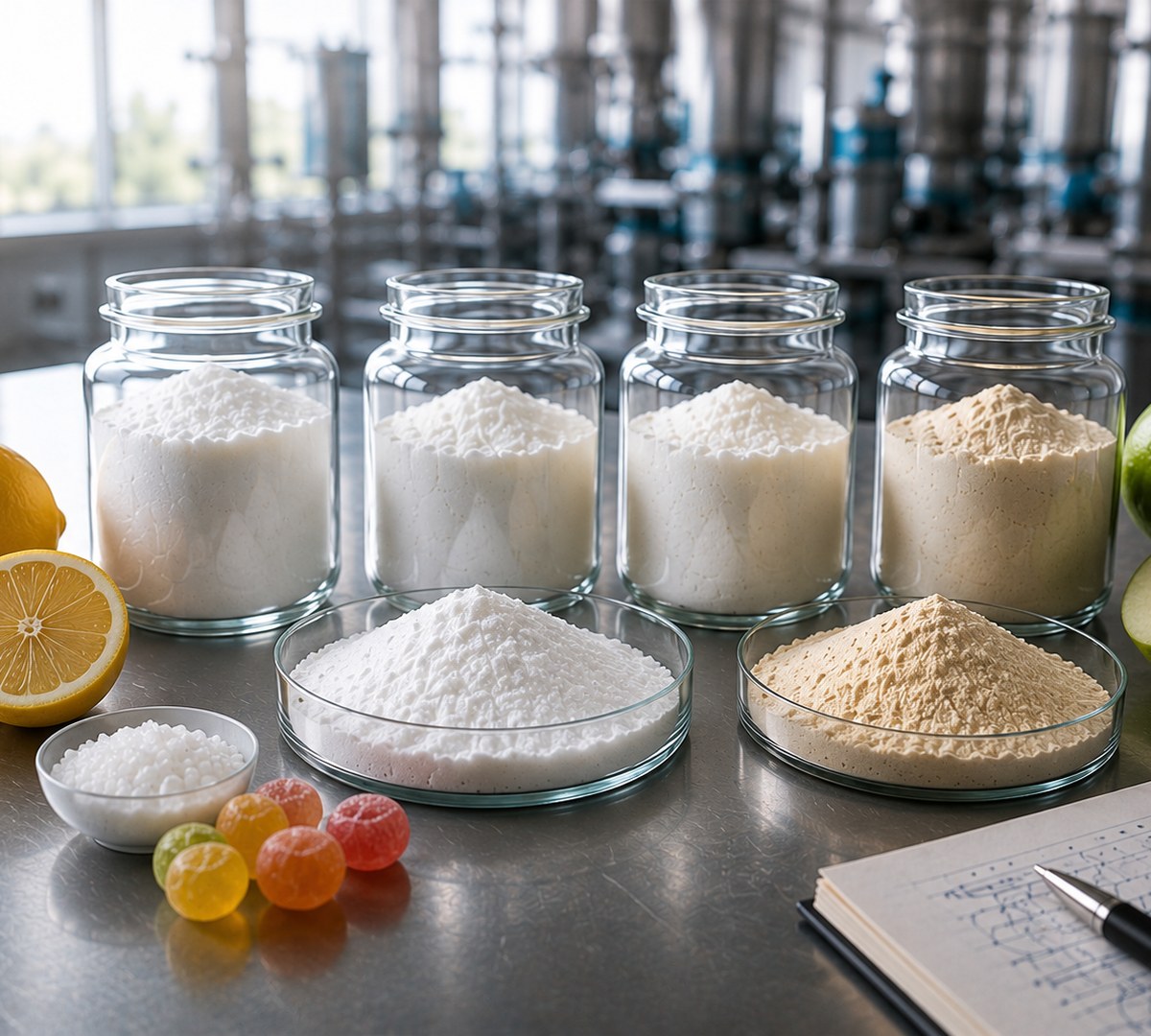
Acidulants are ingredients used to control acidity, adjust pH and shape flavour profiles in food and beverage products.
Depending on the formulation, they may help:
- Develop the desired sourness profile
- Adjust product pH
- Balance sweetness and flavour
- Support processing consistency
- Improve overall sensory perception
Choosing the right acidulant depends on both the product concept and the manufacturing process.
Portfolio
Our Acidulant Portfolio
Citric Acid
Ideal for applications requiring:
- Bright, clean sourness
- pH adjustment
- General-purpose acidification
Malic Acid
Suitable when the formulation requires:
- Smooth, long-lasting sourness
- Enhanced fruit flavour perception
- Balanced acidity
Encapsulated Citric Acid
Designed for applications requiring:
- Controlled acid release
- Improved processing control
- Delayed flavour activation
Encapsulated Malic Acid
Designed for applications requiring:
- Controlled acid release
- Extended sour perception
- Ingredient separation
Fumaric Acid
Ideal for applications requiring:
- Strong acidity at low use levels
- Low hygroscopicity
- Dry-blend stability
L+ Tartaric Acid
Suitable when the formulation requires:
- Distinctive sharp tartness
- Wine acidity adjustment
- Effervescent reactivity
Cream of Tartar
Suitable when the formulation requires:
- Leavening acid function
- Egg-white foam stabilisation
- Crystallisation control
Typical Applications
Where Food Acidulants are used
Confectionery
Supports sour flavour development and product consistency.
Beverage
Used to balance acidity and support flavour profiles.
Functional Foods
Contributes to flavour optimisation in nutritional formulations.
Powdered Beverage Mixes
Provides controlled acidity after reconstitution.
Processed Foods
Suitable wherever controlled acidity is required.
Selection Guidance
Choosing the Right Acidulant
Every acidulant behaves differently. When selecting an ingredient, manufacturers often consider:
- Desired sourness profile
- Speed of flavour perception
- Processing conditions
- Product shelf life
- Consumer sensory expectations
Rather than asking "Which acid is best?", the better question is:
“Which acid best fits this formulation?”
Why EMTA Kimya
More than an ingredient supplier
Reliable Sourcing
A vetted international supplier network that keeps quality and supply consistent.
Technical Guidance
Support in identifying the ingredient solution best suited to your formulation.
Product Documentation
Technical documentation shared on request to support your evaluation process.
Application-Oriented Support
Guidance grounded in how these ingredients actually perform in production.
Responsive Commercial Service
A team that responds quickly when you're evaluating or placing an order.
Related Knowledge
Learn more in the Knowledge Center
Application Guides
What is Malic Acid?
Read Article
Application Guides
What is Encapsulated Citric Acid?
Read Article
Ingredient Comparisons
Citric Acid vs Malic Acid
Read Article
Ingredient Comparisons
Encapsulated Citric Acid vs Citric Acid
Read Article
Application Guides
How to Choose the Right Acidulant
Read Article
Glossary
Food Ingredients Glossary
Read Article
FAQ
Frequently Asked Questions
What are food acidulants?
Food acidulants are ingredients used to control acidity, develop flavour and support product consistency.
Which acidulant should I choose?
The appropriate acidulant depends on the desired flavour profile, processing conditions and formulation objectives.
What is the difference between Citric Acid and Malic Acid?
Although both provide acidity, they create different sensory experiences and are selected for different applications.
When should Encapsulated Citric Acid be used?
Encapsulated Citric Acid is typically selected when delayed acid release or improved process control is required.
Looking for the Right Acidulant?
Whether you are developing confectionery, beverages or specialised food products, our team can help identify the most suitable acidulant solution.